
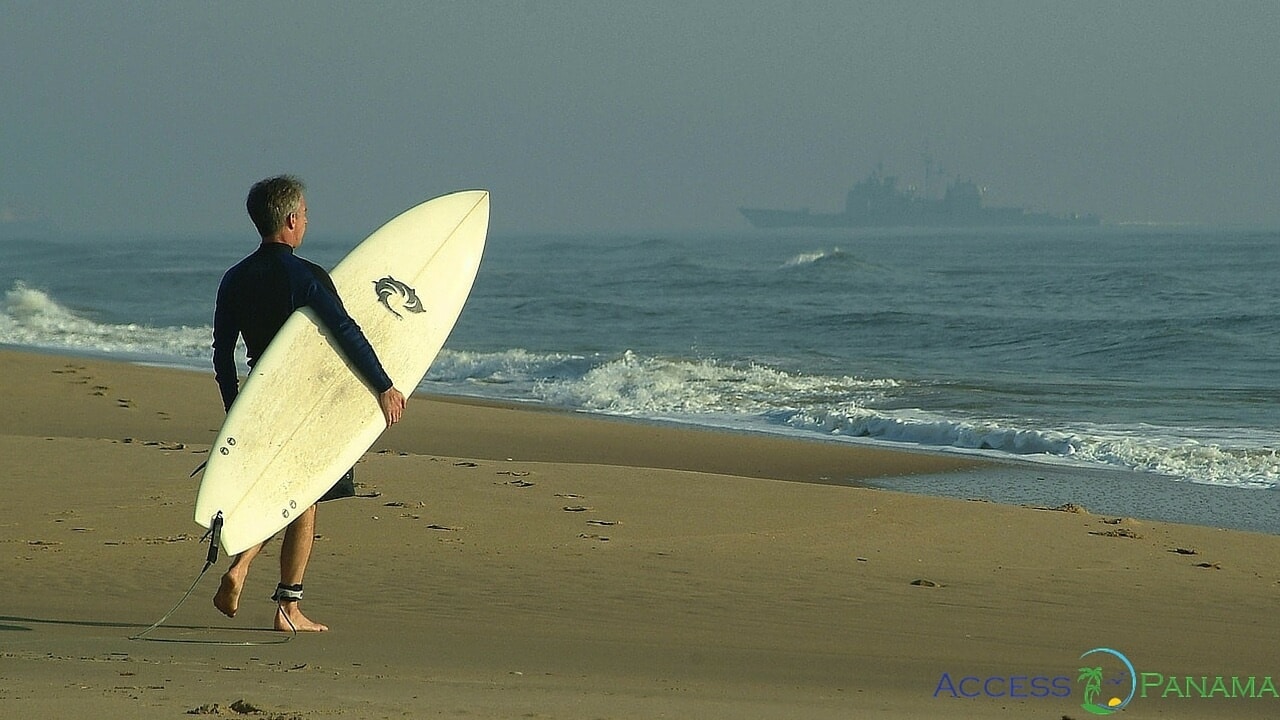
Looking to surf in Panama?
Panama has some of the greatest surf spots in the Americas. It’s not as widely known as a “Surfer’s Paradise” as neighboring Costa Rica, so the Panamanian breaks remain considerably less crowded. You will find very few gringos surfing the Panamanian waves. In most cases, you will share the spot with locals. Nevertheless, the secret about Panama ́s top spots is out, and the country has hosted the ISA World Surfing Games several times.
Among the top spots is Santa Catalina, on the western side of the Azuero Peninsula (about 6 hours from Panama City on the Pacific coast of the country). One of the most famous breaks on Santa Catalina is La Punta, or The Point, with waves that break both left and right. The main wave is the right — which has incredible tubes — and is best surfed in a medium to high tide. The rides are long and powerful, and the waves range between six and 12 feet. The sharp rock bottom makes this a dangerous spot, however, suitable only for very experienced surfers.
Beginners at Santa Catalina head straight for the beach break at El Estero, which has left and rights over a sandy bottom. This spot is best surfed at low tide, when the swells can get quite large. El Estero is not as dangerous as the point, but it’s great fun for the steep drops. Nearby Punta Brava, which is just west of El Estero, is another spot for advanced surfers, with powerful tubes breaking over another sharp rock bottom.
Because of its remote location (a new road has just been finished, so it takes about six hours to get here from Panama City) there hasn’t been much foreign investment in the area and Santa Catalina is still a pretty laid-back beach town where most people fish for a living. There are a few hostels and hotels, as well as some restaurants, but not much else. Downsides of Santa Catalina include some rather aggressive locals (especially at the Point) and beaches that are fairly dirty.
Playa El Palmar is not a world-class surfing spot like Catalina, but it has some decent breaks. El Palmar is located outside of the town of San Carlos, about 10 km west of Playa Coronado on the country’s Pacific coast. This beach can be reached in roughly an hour and a half from Panama City, making it a popular weekend destination for city-dwellers. Palmar is very popular with beginners. If you want to learn how to surf, this is your beach. Classes at El Palmar Surf Camp or at the Panama Surf School start at about $40 for two hours.
There are three main breaks at El Palmar: Frente El Palmar (El Palmar Front), a beach break over a sandy bottom typically surfed in low to medium tides; Punta Palmar (Palmar Point), a rock-bottom point break with right-peeling waves at medium to high tide; and Hawaiisito (Little Hawaii), a rock-bottom point break to the left of the beach break.
Hawaiisito is the best break of the bunch for smaller swells (it tends to wash out if the waves get much bigger) because the Front often gets crowded with swimmers and beginning surfers (especially on weekends). Playa El Palmar is the perfect weekend get-away. There are plenty of hostels, hotels, and campgrounds, and the beach is easily accessible by car. The $4 entrance fee per car goes to pay for beach cleaning and maintenance, so is well worth it.
Playa Venao is another one of Panama’s top surf spots. Venao, which hosted the ISA World Surfing Games 2011, is located on the east of the Azuero Peninsula and can reached by car in about 5 hours from Panama City. Like Catalina, Venao is not yet developed, but that’s changing fast. There are several little restaurants and places to stay and the town is easily accessible by car (about 30 minutes from Pedasi). Visitors with 4x4s should be sure and visit the amazing breaks at Playa Cambutal, which is a short ride on a dirt road away.
The break in Playa Venao is a beach break with a sand bottom, which catches just about every swell and gets up to 10-foot waves — making it exceedingly popular. This spot is surfed at medium to high tide. Beginners and advanced surfers alike enjoy this break.
Those in search of waves on the Caribbean side of the country should make their way to the islands of Bocas del Toro, about 30 km from the Costa Rican border, during the December to March dry season. With little in the way of tides in the Caribbean, surfers here are not as dependant on their timing as they are on the Pacific.
Hot spots around Bocas include Playa Paunch on Isla Colon, with its great tubes breaking both left and right (mind the reef and wear booties); Dumpers on Isla Colon, another reef break with a very steep drop and short ride where waves can reach nine feet some days; Wizard and Red Frog Beaches on Isla Bastimentos, two beach breaks with nearly constant lefts and rights that are perfect for beginners and intermediates alike; and Silverbacks on Isla Caranero, a reef break that is as close to Hawaii as it gets in the Caribbean, with 25 feet faces on a good swell. Silverbacks is mainly for pros.